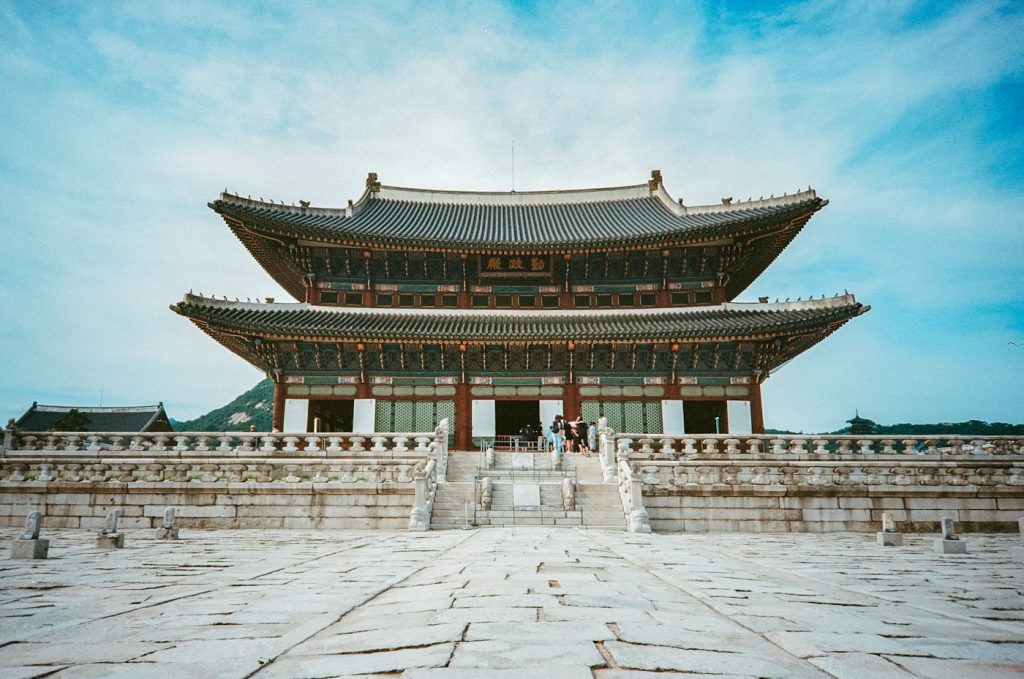
Choose Gyeongbokgung Palace if you want royal architecture and a cultural visit that fits into a Seoul sightseeing day. Choose Korean Folk Village if you want to spend more time exploring traditional village life, performances and hands-on activities—and are willing to plan a trip to Yongin.
For a short Seoul stay, Gyeongbokgung is easier to fit between other sights. Korean Folk Village makes more sense when village houses and performances are worth setting aside most of a day for.
Admission and general visitor information checked October 15, 2026. Allow extra time for transport and queues.
At a glance: a palace visit or a village experience?
| Decision | Gyeongbokgung Palace | Korean Folk Village |
|---|---|---|
| Main cultural focus | Royal spaces, gates, courtyards and palace architecture | Traditional houses, village settings, seasonal performances and activities |
| Location | Jongno, central Seoul | Yongin, Gyeonggi-do |
| Suggested on-site allowance | 2–3 hours for a focused visit; longer if adding a tour or museum | 3–5 hours if performances and activities are important |
| Best planning approach | Fit it around other central Seoul stops | Check the programme, then plan outward and return transport |
| Language consideration | A guide or reliable background information helps explain royal spaces | Visual performances may be easier to follow than dialogue-led activities |
| Key limitation | A short photo visit may leave the history unexplained | Travel and waiting can take time away from the cultural experience |
Allow longer if you plan to join a tour or watch several performances.
1. Choose by the culture you want to understand
Gyeongbokgung: how a royal capital presented itself
Gyeongbokgung was established as the main palace of the Joseon dynasty. Its location and royal architecture make it a useful introduction to the relationship between the monarchy and Seoul. The official Seoul tourism guide provides historical context and visitor information.
To make the visit more than a photo stop, choose one question to follow: how do gates and courtyards separate spaces, how are important buildings positioned, or how does the palace relate to the surrounding city? A guided explanation can turn similar-looking structures into a coherent story.
Korean Folk Village: how a traditional community worked
Korean Folk Village recreates settings associated with Joseon-period daily life. Korea Tourism Organization describes traditional houses, seasonal cultural performances and experience programmes. Consult its Korean Folk Village listing for an overview.
At Korean Folk Village, traditional houses, work spaces and performances introduce aspects of daily life in the Joseon period. It is a recreated cultural attraction, so plan around the activities you want to see.
Our decision rule: choose the palace for royal space and architecture; choose the village for a broader village-life setting and a programme-led visit. Neither represents every aspect of Korean culture.
2. Compare the whole time commitment, not just time inside the gate
For either destination, calculate: hotel-to-gate travel + admission and orientation + cultural visit + meal/rest time + return travel. This is more useful than comparing admission prices alone.
Gyeongbokgung has subway access via Gyeongbokgung Station on Line 3. The palace’s official directions identify Exit 5. Still allow time to reach the appropriate entrance, buy a ticket where needed and orient yourself.
Korean Folk Village is in Yongin. Its outward journey depends heavily on whether you start in northern Seoul, Gangnam or somewhere else. Use the exact Korean destination name, 한국민속촌, and check both your outward and return journey. Avoid relying on an old blog’s shuttle timetable without confirming that it still operates.
The village visit involves travel to Yongin as well as time inside the attraction. The transport examples below show the main approaches.
Two transport examples for Korean Folk Village
Save the destination as 한국민속촌, 경기도 용인시 기흥구 민속촌로 90 (90 Minsokchon-ro, Giheung-gu, Yongin). The operator’s official transport page, checked October 16, 2026, lists these options:
- From the Gangnam area: compare express bus 5001-1 from Sinnonhyeon/Gangnam or 1560 from Gangnam. Enter your exact starting point and 한국민속촌 in your route app to find the current boarding stop and departure.
- Rail plus local bus: reach Sanggal Station (상갈역) on the Suin–Bundang Line, use Exit 3, then compare bus 37 or 10-5 toward the village. Sanggal is the operator’s nearest listed subway station, but the final bus or taxi leg still needs planning.
The operator identifies several similar stop names, including 한국민속촌 and 민속촌 입구. Match the route direction and final walking leg before boarding. Save the return stop separately and use a map app for departure times.
Show a driver: 한국민속촌에 가나요? — Does this bus go to Korean Folk Village?
3. Check whether language will affect what you enjoy
You can appreciate architecture without understanding Korean, but appearance and historical meaning are different things. For Gyeongbokgung, check whether an English guided tour fits your date and arrival time. Reserve a place if the tour requires booking.
At Korean Folk Village, music, movement and visual demonstrations can communicate differently from dialogue-led character interactions. Check the language and participation requirements for the activities you want to join.
For a visitor who speaks no Korean: select two or three activities you can confidently follow. A shorter visit with understandable experiences may be more satisfying than spending a day waiting for programmes whose content is unclear to you.
4. Work out the total cost for your group
At the time of checking, official tourism listings showed general foreign-adult admission of KRW 3,000 for Gyeongbokgung, ages 19–64, and adult/teen admission of KRW 37,000 for Korean Folk Village. Check age eligibility and any offers for your travel date. Confirm with the palace operator and Korean Folk Village.
| Budget line | What to include |
|---|---|
| Admission | The actual ticket available for each person’s age and eligibility |
| Transport | Return fares, plus any taxi or booked transport you intend to use |
| Food and rest | The meal and break you would need during the visit |
| Optional extras | Only the rentals, activities or purchases you actually want |
For one adult using the two reference admission prices, the difference is KRW 34,000 before transport and extras. Weigh that additional admission cost against the performances and activities you want to enjoy.
For a group, calculate the difference person by person. A shared taxi, a child ticket or a special offer can change the result. Avoid comparing one attraction’s promotional price with the other’s full-price ticket and presenting the difference as universal.
5. What would you give up by choosing each destination?
A trip has a time budget as well as a money budget. Adding Korean Folk Village to a short Seoul stay may mean dropping another neighbourhood, meal or attraction. Choosing Gyeongbokgung may leave room for more city exploration, but it will not replace the village setting you wanted.
| Your situation | Suggested choice | Reason |
|---|---|---|
| Two days in Seoul, with several city stops already planned | Gyeongbokgung | It can fit into a central Seoul day without making Yongin the main destination |
| You already visited a palace and want a different cultural setting | Korean Folk Village | Village-life themes can add variety instead of repeating a royal-space visit |
| Traditional performances and activities are your main interest | Korean Folk Village, after checking the programme | Choose a date whose actual schedule supports your interests |
| Your group is tired or dislikes transfers | Whichever has the simpler verified journey from your hotel | Comfort and usable visiting time matter more than a generic ranking |
With children, the main differences are the length of the journey and how much walking and standing each visit involves.
6. A realistic visit plan for each option
A focused Gyeongbokgung visit
Start with the palace rather than squeezing it in after several other stops. Reserve 2–3 hours on site, choose a guided or self-guided focus, and add a meal or rest afterwards. If you also want to visit a museum or take time for photography, reduce the number of later commitments.
Official listings show a usual Tuesday closure, with holiday-related exceptions. Seasonal opening hours and last admission also vary. Check the exact date before travelling. A changing-of-the-guard or other event should be treated as an extra until its current schedule is confirmed.
A programme-led Korean Folk Village visit
Choose the activities you care about before choosing your departure time. Reserve 3–5 hours on site, including a meal or break, and build travel around that block. Select one must-see programme and one flexible option so that a timetable change does not ruin the whole day.
The village’s official operating calendar should take priority over a general tourism listing when daily hours differ. For an evening visit, choose a date with confirmed late opening.
How to choose and confirm a performance
Open the village’s official performance list and match three details: your visit day, the start time and the numbered venue. The schedule checked October 16, 2026 illustrates why the day matters:
- 우리가락 좋을씨고: the traditional instrumental programme is listed daily at 11:30, 14:30 and 16:30, at Wanhyangru, Folk Village No. 19. Its individual performance page says rainy-weather operation is decided according to conditions.
- 삼도판굿: the list shows 12:30 Monday–Thursday and 12:00 Friday–Sunday/public holidays, at the performance venue, Folk Village No. 37. A weekday timetable therefore cannot simply be copied to a weekend visit.
An afternoon planning example: if the 14:30 instrumental performance is confirmed for your date, finish lunch and find No. 19 beforehand, then leave the later village walk flexible. Arrive early for seating and check the operator’s daily operating information and entrance notices when you arrive.
Show staff: 오늘 이 공연은 몇 시에 어디에서 하나요? — What time and where is this performance today?
7. Weather, walking and the return journey
Both cultural visits involve outdoor areas. Plan around the weather and your group’s ability to walk and stand, rather than assuming that an attraction described as family-friendly will suit every person. Check accessible routes and assistance directly if someone has mobility needs.
For Yongin, check the return route before you leave Seoul. Record the stop location, transfer requirements and last usable connection for your destination. A late programme is only a sensible choice if the group can get back comfortably.
If heavy rain or poor conditions would remove the activities you most want to see, moving the cultural visit to another day may be better than forcing a crowded itinerary.
The final choice
Gyeongbokgung is the stronger default for a first cultural stop during a short Seoul trip. Korean Folk Village is the more deliberate choice when traditional village settings and scheduled experiences justify a dedicated trip.
Gyeongbokgung is in central Seoul; Korean Folk Village is in Yongin and involves an additional return journey.
This comparison is based on the official sources linked above. Transport routes and performance listings were checked October 16, 2026; confirm the latest schedule before travelling. Allow extra time for transfers and queues.
For help fitting your choice into a city visit, see our three-day Seoul itinerary and Korea travel apps guide.
Representative photograph of Gyeongbokgung Palace; Korean Folk Village is a separate destination. Photo by Daniel Bernard on Unsplash (Unsplash License).