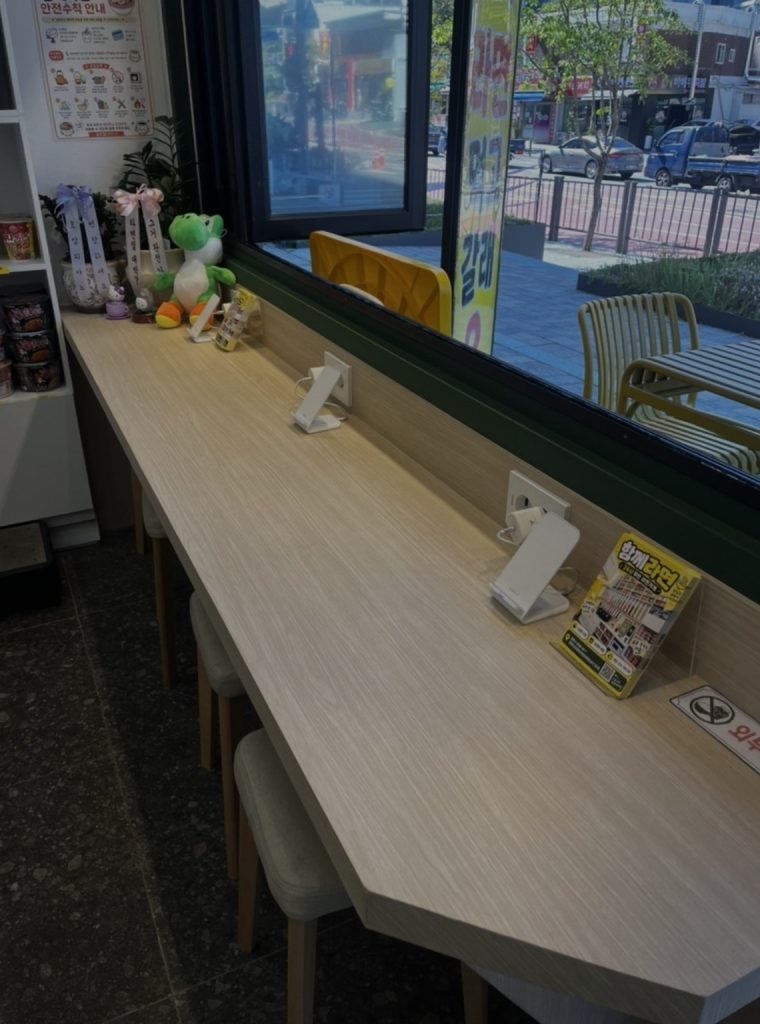
Korean convenience stores are handy for a quick meal, a drink or a light snack between sightseeing stops. This guide covers choosing food, paying, heating your meal and using the seating area.
Facilities vary by branch. Check for a dining area, microwave and hot water before choosing a meal you want to prepare and eat inside.
On this page — tap to expand
- Start by Checking the Store, Not Just the Food
- What to Eat: Choose One Main Item First
- Pay Before Opening or Preparing Your Meal
- Read These Korean Words on the Package
- A Promotion Example: Ask Before Taking Extra Items
- How to Use the Microwave
- Hot Water and Noodle Cookers Work Differently
- Can You Eat Inside the Store?
- Finish by Sorting Your Waste
- Useful Korean Phrases for Your First Visit
- Dietary Requirements Need a Closer Check
- Choose a Meal That Fits Your Stop
Start by Checking the Store, Not Just the Food
CU, GS25 and 7-Eleven are familiar chains across Korea. For a late-night stop, look at the branch’s posted opening hours.
The Korea Tourism Organization’s CU Ramyun Library feature illustrates a specialist branch with noodle cookers. The feature was published in 2024; check the equipment and prices at the branch you visit.
What to Eat: Choose One Main Item First
Lunch boxes, gimbap and noodles are common meal options; sandwiches and bread are useful for takeaway.
Dosirak: A Lunch Box
A dosirak (도시락) typically combines rice with several side dishes. Compare the actual contents, portion and package price. Read its storage and heating instructions; some components may need to be removed before microwaving.
Samgak Gimbap: A Triangular Rice Snack
Samgak gimbap (삼각김밥) is a portable rice-and-seaweed option with a filling. Follow the wrapper’s numbered opening steps, since the film may separate the seaweed from the rice. Fillings vary: a familiar-looking package does not establish whether it contains meat, fish or allergens.
Cup Noodles and Packet Ramyeon
Cup noodles and packet noodles are not interchangeable. A cup product may use hot water, microwave heating or a drain-and-mix method. Packet noodles generally need the cooking method on their label; a hot-water dispenser alone is not a substitute for a suitable cooker.
Check whether the sauce is spicy and whether the product is a soup or a drained noodle dish. If unsure, choose something with instructions you can understand rather than guessing from the package picture.
Sandwiches, Bread and Drinks
Sandwiches, bread and ready-to-drink products work well for breakfast or takeaway. Pouch drinks may be sold separately from their ice cups, so include both prices when comparing them with bottled drinks.
Pay Before Opening or Preparing Your Meal
At a staffed branch, take your chosen items to the counter and pay before opening them or using the food-preparation area, unless the branch clearly directs otherwise. Ask for utensils or a bag if you need them, and check whether there is an extra charge.
A 1+1 label generally describes a buy-one-get-one offer; 2+1 generally describes two eligible items plus one. Confirm the products and conditions with the cashier. Do not assume any two similar drinks qualify, or that you must buy an offer larger than you need.
Keep a backup payment method. Card or phone-payment acceptance depends on your card, device and terminal. Our phone-payment guide explains what to check before relying on a mobile wallet.
Read These Korean Words on the Package
| Korean wording | English meaning | How to use it |
|---|---|---|
| 조리방법 | Preparation instructions | Read the method before choosing a microwave, hot water or a noodle cooker. |
| 전자레인지 / 전자레인지용 | Microwave / for microwave use | Check the complete instructions, including lid and packaging directions. |
| 뜨거운 물 | Hot water | Follow the product’s water amount, fill line and waiting instructions. |
| 개봉 | Open | Read the surrounding instruction to see what should be opened and when. |
| 보관방법 / 냉장보관 | Storage instructions / keep refrigerated | Check how the product should be stored before and after purchase. |
If a heating label lists separate times for 700W and 1000W, match the row to the appliance’s stated wattage. Do not copy the time from the neighbouring customer’s different meal. If you cannot identify the setting, show staff the package and ask “이 전자레인지는 몇 와트예요?” — What wattage is this microwave? There is no single heating time that suits every lunch box.
A Promotion Example: Ask Before Taking Extra Items
Suppose one drink has a 1+1 shelf label and a similar drink beside it does not. Take the labelled product to the cashier and ask “1+1 행사 상품인가요?” — Is this a buy-one-get-one item? Then ask “두 개를 가져와야 하나요?” — Should I bring two? If you want different flavours, ask “다른 맛도 가능해요?” — Can I choose a different flavour? Have the cashier confirm the eligible items and total before paying.
A 2+1 offer may mean bringing three eligible items to the counter, but the shelf label and cashier determine which combination qualifies. If you only need one drink, compare the single-item total rather than adding food or drinks just to complete a promotion.
How to Use the Microwave
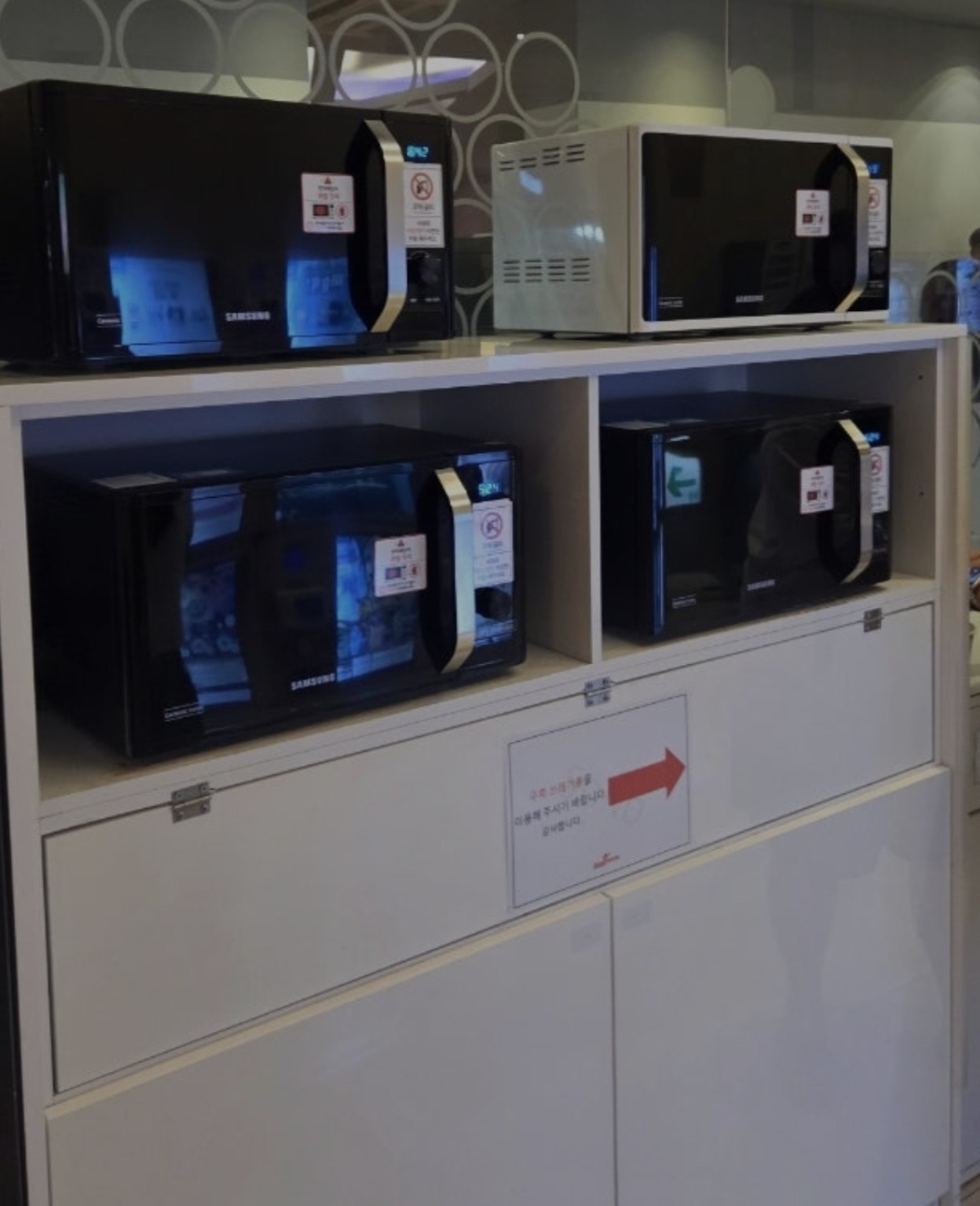
Read the package before pressing a button. Check the indicated heating time, the microwave wattage if shown, and whether to remove or loosen the lid. Use only packaging marked suitable for microwave heating; remove any items the instructions say to take out.
Do not microwave a sealed package, metal foil or a cup simply because another customer is heating a different product. Ask staff if the instructions are unclear. Take care when removing the food: steam, containers and contents can be hot.
Hot Water and Noodle Cookers Work Differently
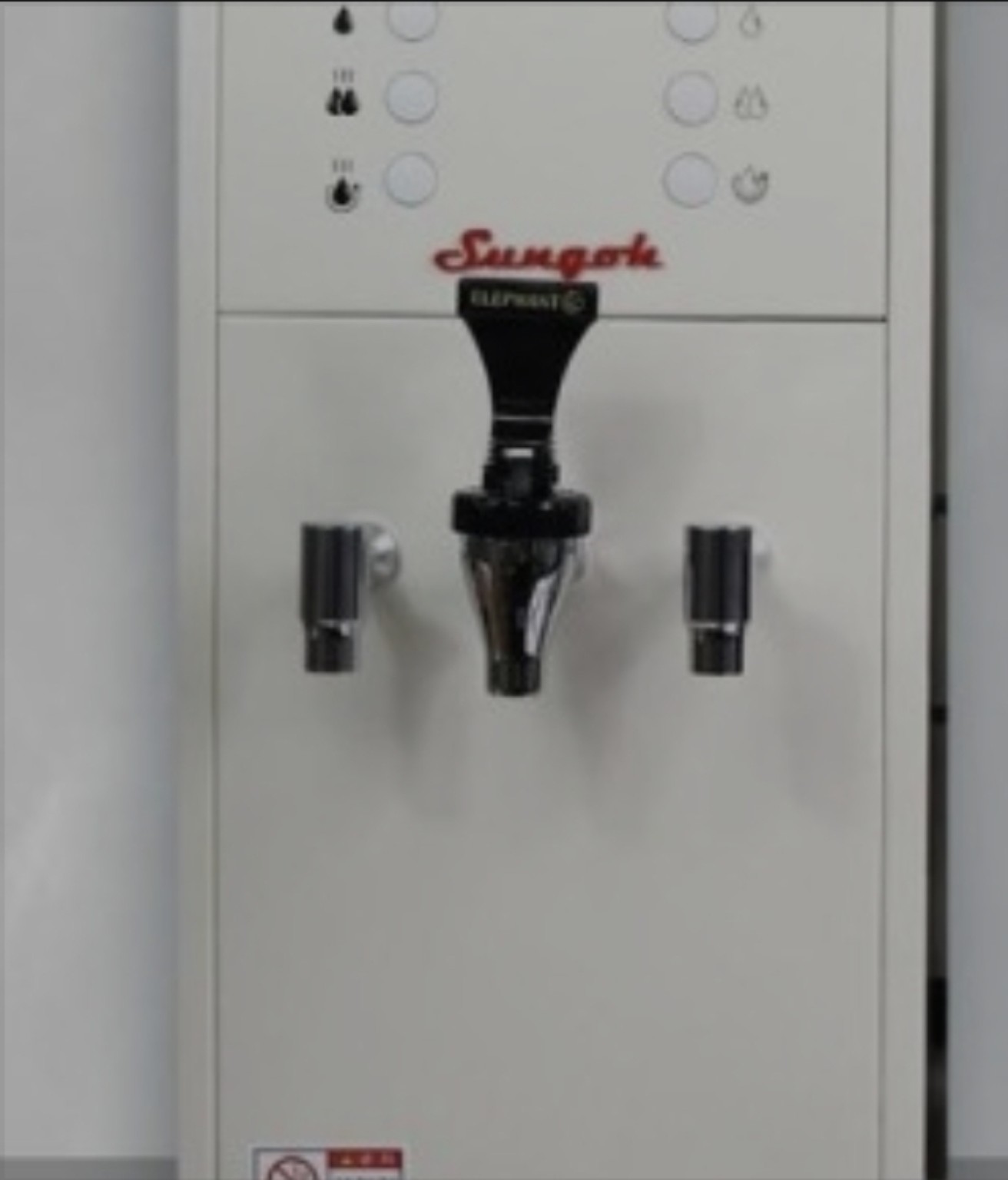
For cup noodles that require hot water, identify the dispenser’s hot-water outlet from its labels or ask staff. Place the container securely beneath it, keep your hands clear, and fill to the product’s marked line. Cover and wait as directed on the package; drain the water before adding sauce if instructed. Use a container suitable for boiling water.
A dedicated noodle cooker is a separate appliance. Ask whether you need a special bowl and whether it costs extra. Follow that machine’s signs rather than copying a different branch’s button sequence. The KTO Ramyun Library example involves paying for noodles and an appropriate vessel before cooking.
Can You Eat Inside the Store?
I sometimes use a convenience store with seats when I want something light, such as ramyeon or gimbap. A full meal at a restaurant would feel like too much at those times. Being able to sit down for a small snack is what makes these branches useful to me.
The photos below show a window-side counter and a separate table area. Confirm that the seating is open for use before preparing your meal; outdoor tables may have different rules.
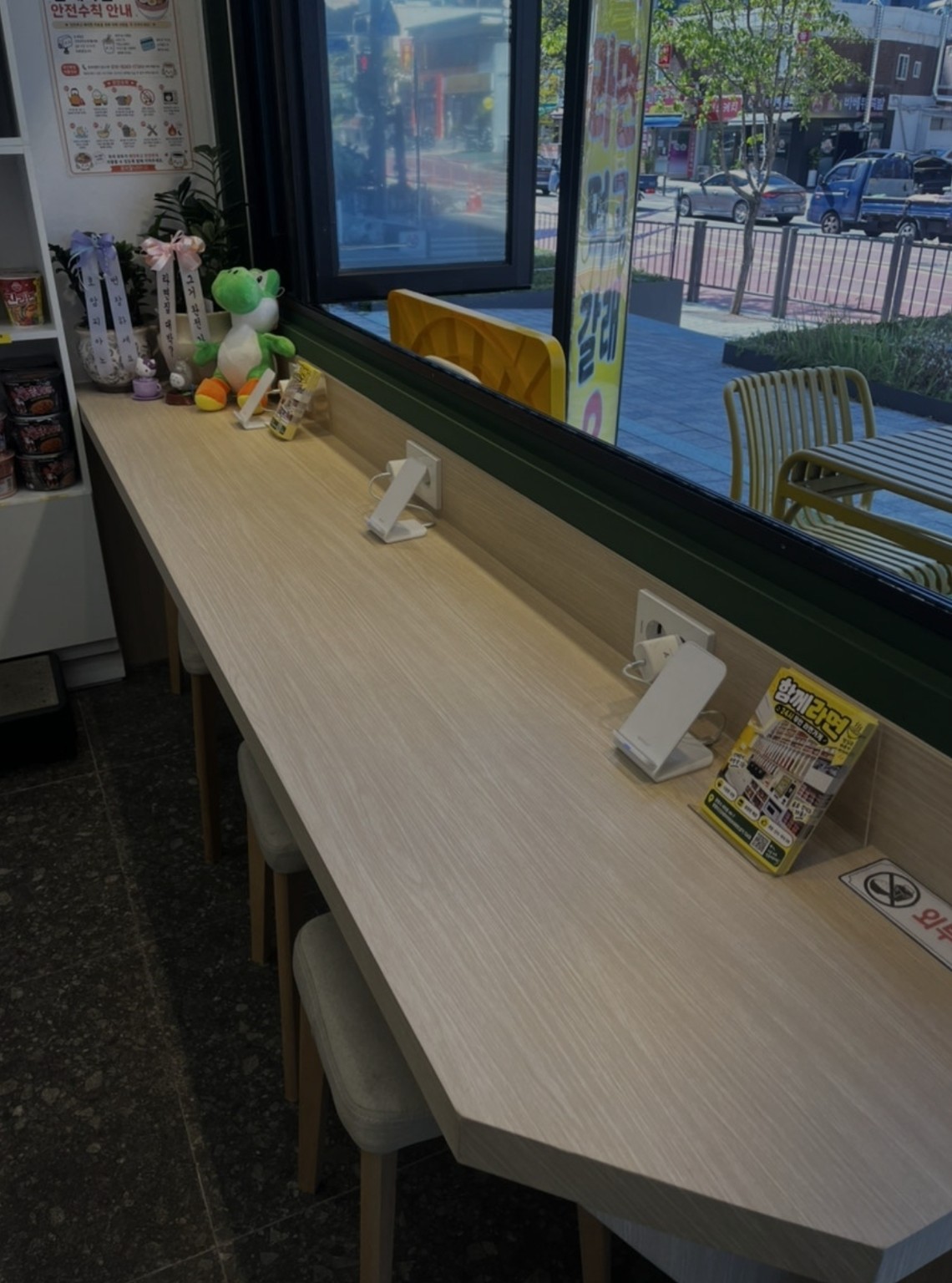
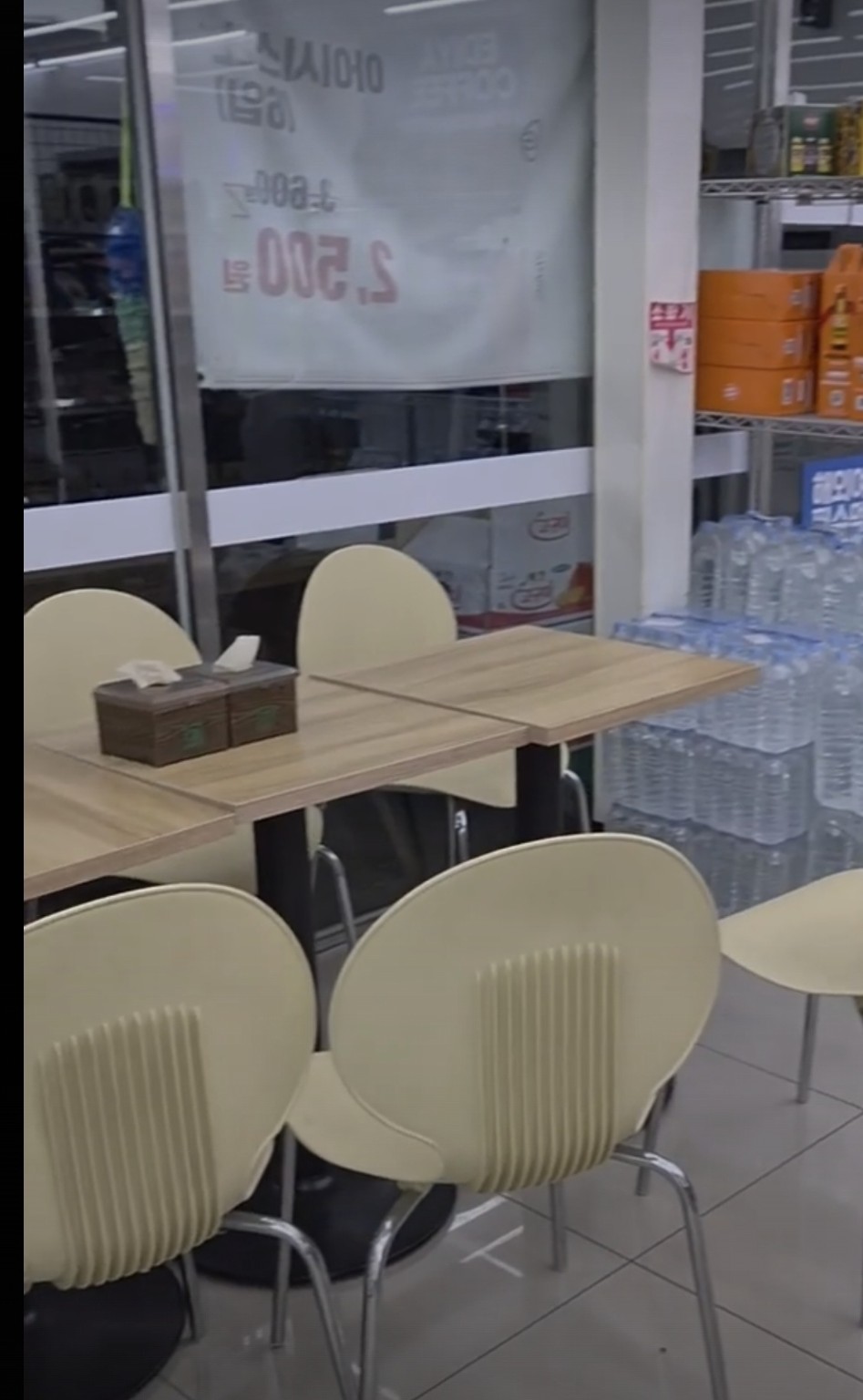
Use the designated customer area for the food you have purchased and follow any time or food restrictions. Keep your bags out of the aisle and avoid taking more seats than your group needs. If no suitable eating area is available, choose takeaway food and use a place where eating is allowed.
Do not drink alcohol inside the convenience store, including at its indoor eating counter or tables. Selling beer or other alcoholic drinks does not make the seating area a bar. Follow the branch’s posted rules for any outdoor tables as well.
Finish by Sorting Your Waste
Follow the bins and signs at the branch. Separate leftover food, liquid, packaging and recyclables as instructed. Ask where noodle broth should go; do not empty it into an arbitrary sink or place a cup full of liquid in a general bin.
Wipe up small spills and leave the counter usable for the next customer. If something spills around an appliance, tell staff instead of trying to clean electrical equipment yourself.
Useful Korean Phrases for Your First Visit
Show these short questions to staff if speaking feels difficult:
여기서 먹어도 돼요? — Can I eat here?
전자레인지 사용해도 돼요? — Can I use the microwave?
이거 어떻게 데워요? — How do I heat this?
젓가락 주세요. — Please give me chopsticks.
국물은 어디에 버려요? — Where should I dispose of the broth?
Dietary Requirements Need a Closer Check
Do not infer ingredients from a product’s appearance. Rice, noodles or vegetable pictures do not establish that a packaged meal is vegan or halal. Read the ingredient and allergen label and look for certification relevant to your requirements. For an allergy, obtain a reliable answer before eating; a camera translation can assist but should not replace confirmation.
If packaged food is difficult to verify, compare our Seoul vegan restaurant guide or halal dining guide for a planned meal instead.
Choose a Meal That Fits Your Stop
- Taking food away: choose a sandwich or rice snack and a drink for a quick, light meal.
- Sitting down for something warm: start with one lunch box or a noodle product suited to the equipment available. Add a side only if you want a larger meal.
- Sharing snacks: choose the amount your group wants before comparing promotions. An extra free item is useful only if you will use it.
For a price check, show staff: 이 조합으로 총 얼마예요? — How much is this combination in total? Use the shelf labels and confirmed checkout total to decide whether to add anything else.
Include drinks and toppings in your meal budget, as their cost adds to the main item.
Guide prepared October 11, 2026; updated October 15, 2026 with store-facility photos and the author’s experience. The linked KTO specialist-store feature was last updated in 2024 and is used as background, not current branch verification. Product prices, promotions, equipment, hours and eating rules vary; follow current labels and store instructions. The featured image and facility photographs show the author’s convenience-store visit.