If you are learning how to ride a city bus in Korea, remember this sequence: find the correct stop and direction, board through the front door, tap your transportation card, press the stop button before your destination, then tap off and leave through the rear door.
The photographs in this guide come from my local bus travel in Anyang, Gyeonggi-do. They show a stop near Beomgye Station, the rear-door area, a red stop-request button and an EZL-branded card reader. Use them to recognise the equipment; fares, routes and some operating rules differ by city and service.
This is a guide to ordinary local city buses. For a reserved journey between cities, see the separate express-bus terminal and boarding guide.
1. Check the stop and direction before the bus arrives
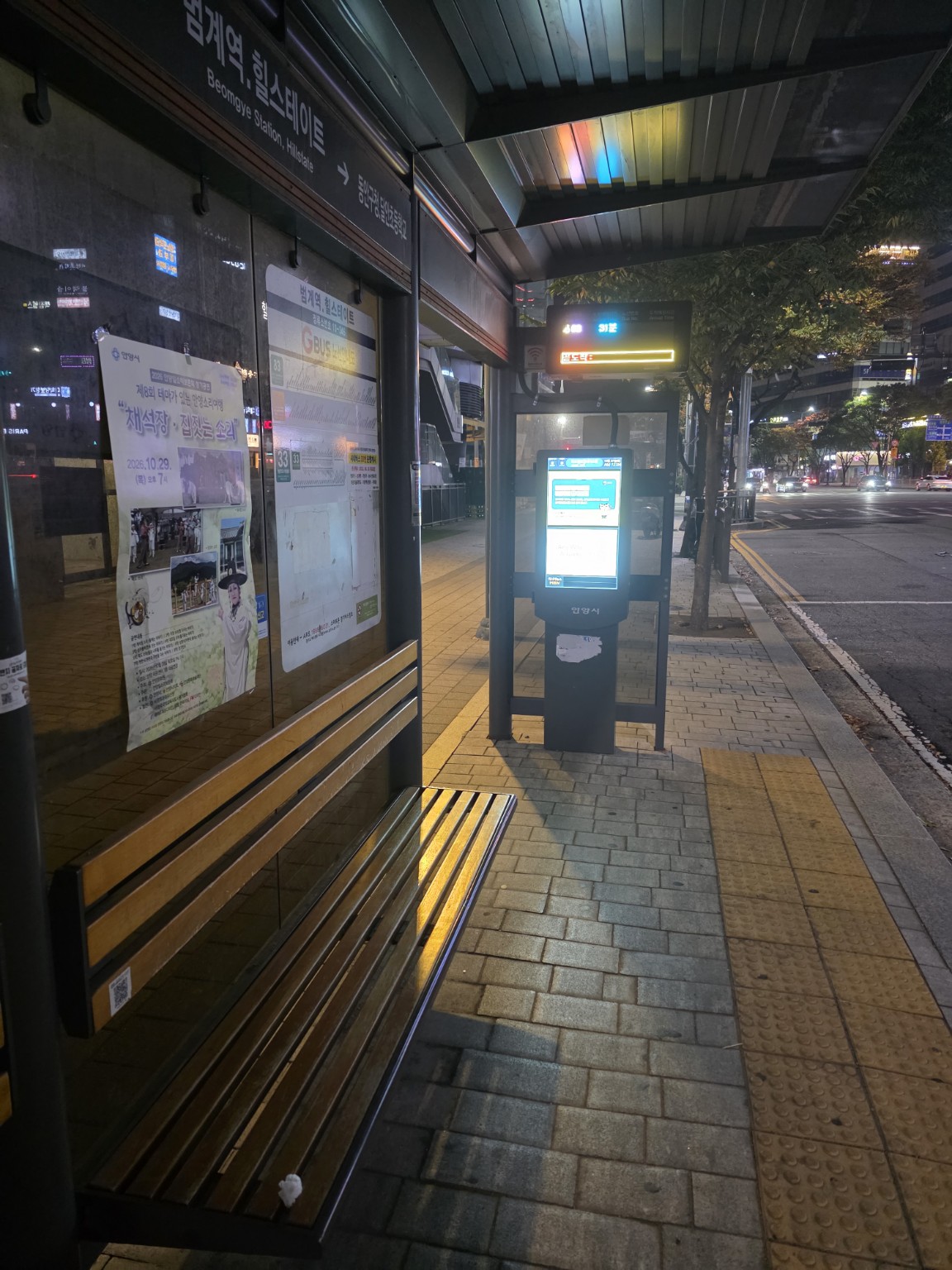
Start with directions to your destination in a map app. Note the boarding stop, route number, direction and the stop where you will get off. Save the Korean destination name as well as its English spelling so you can compare it with a sign or show it to the driver.
At the stop, match the name and, where available, the stop ID with your route instructions. The same bus number can serve the opposite direction across the road. Compare the direction or the next stops rather than choosing a shelter only because its name looks familiar.
The photographed shelter has a printed route board and a separate electronic arrival display. Use the display to look for your route, but check the number on the approaching vehicle too. Arrival estimates can change; a countdown is not a guaranteed departure time.
For local checks, Gyeonggi Bus Information lets you search by route number, stop name or stop number. Its search guidance notes that predicted arrivals can differ with traffic, route changes and vehicle dispatching.
Keep clear of the road while waiting. If the stop is crowded, follow the boarding queue and let people leave before moving into the doorway.
2. Board at the front and tap your transportation card
The usual arrangement on an ordinary Korean city bus is boarding through the front door near the driver and leaving through the rear door. The Korea Tourism Organization’s city-bus guide explains this pattern and recommends preparing a transportation card because many services are cashless.
Have a compatible transportation card ready before the bus reaches you. A card accepted for shopping is not automatically a bus transportation card. For card options, see the official transportation-card overview. If using a phone, confirm that its specific transportation-card service is supported rather than assuming a normal mobile wallet will work.
Board and tap the card on the reader beside the driver. Wait for the reader’s response before moving further inside. Present one card rather than a wallet holding several cards. If the reader reports an error or insufficient balance, ask the driver what to do; do not walk past as if payment succeeded.
If you are uncertain about the route, show your destination before the bus departs and ask “이 버스 ___ 가나요?” — “Does this bus go to ___?” Keep the question brief so boarding can continue.
3. Find the exit, reader and stop button while travelling
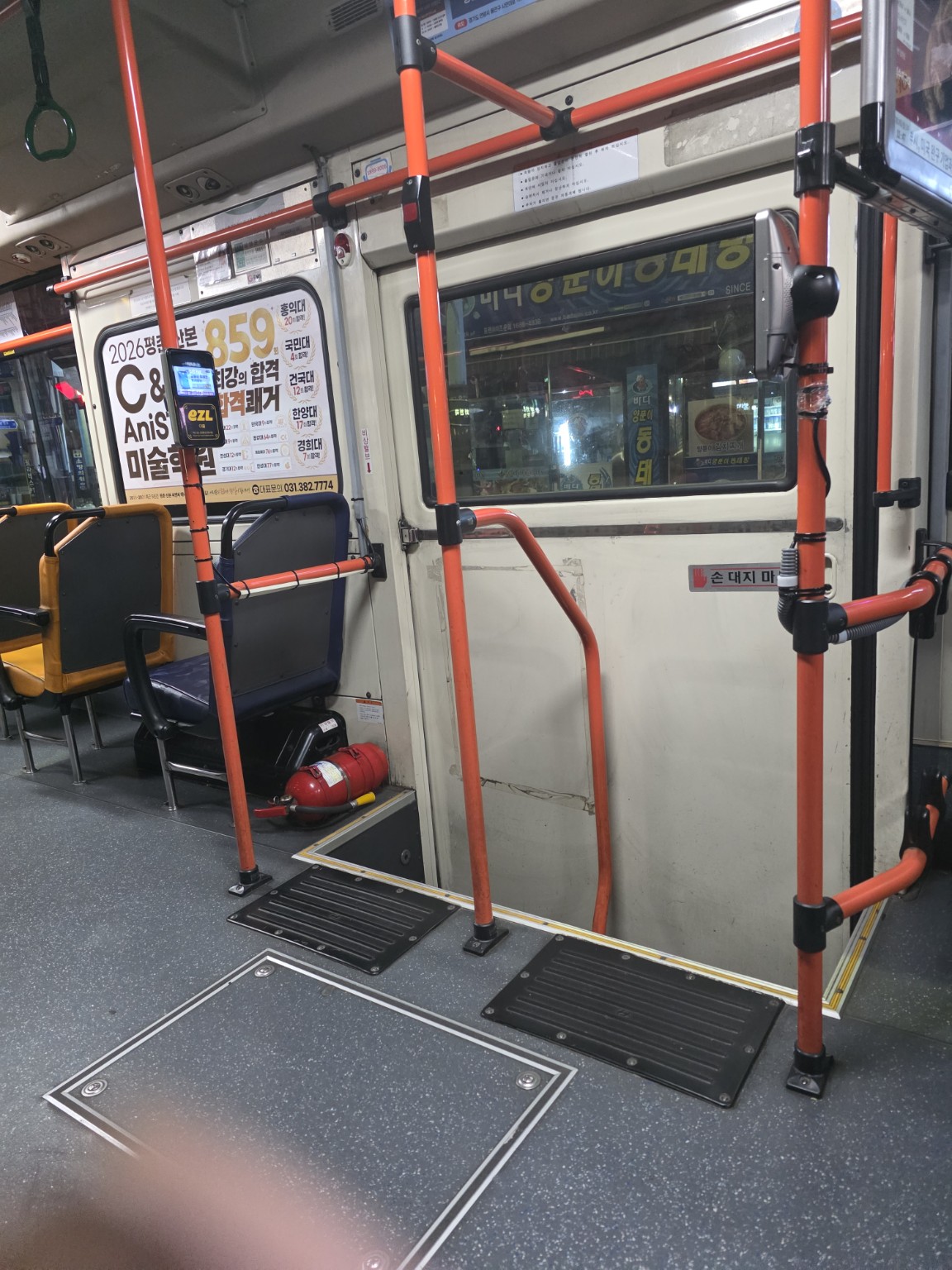
After boarding, move away from the front entrance and find a seat or hold a fixed rail or strap. Keep the aisle and doors clear. It is easier to locate the exit equipment early than to search for it just as your stop arrives.
In the photograph, the exit door is on the right and a card reader is mounted nearby. A low floor or wide exit does not mean the doorway is a place to stand. Stay behind the door’s moving area and hold on when the bus starts or brakes.
Follow the destination in your map app together with the announcements and display. A useful distinction is 이번 정류장 (“this stop”) versus 다음 정류장 (“next stop”). Do not treat every place name on a screen as the stop currently outside.
4. Press the stop button before your destination
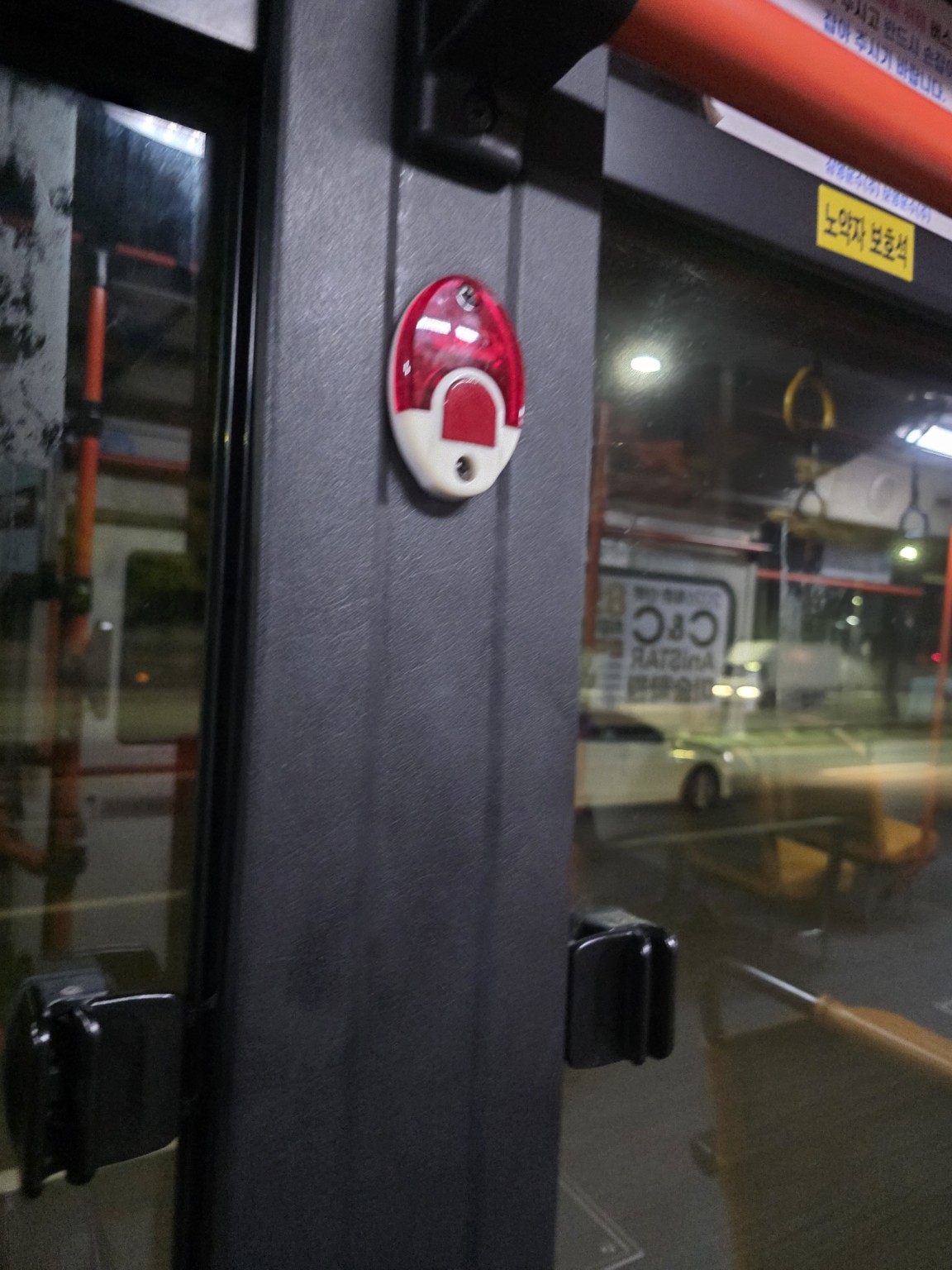
When your destination is the next stop, press a stop-request button once, allowing the driver time to respond. Look for confirmation such as an illuminated button or stop-request indicator where fitted. If another passenger has already registered the stop, there is no need to keep pressing.
The red button in my photograph is a request to stop; it is not a passenger-operated door opener. Avoid waiting until the bus has passed your stop. If you miss it, stay aboard safely, request the next stop and check a new route from there.
Prepare your card and belongings without rushing. Hold on when moving through the bus, and if you need help or more time, tell the driver. Waiting for the vehicle to stop is more important than hurrying to the door while it is moving.
5. Tap off with the same card, then leave through the rear door
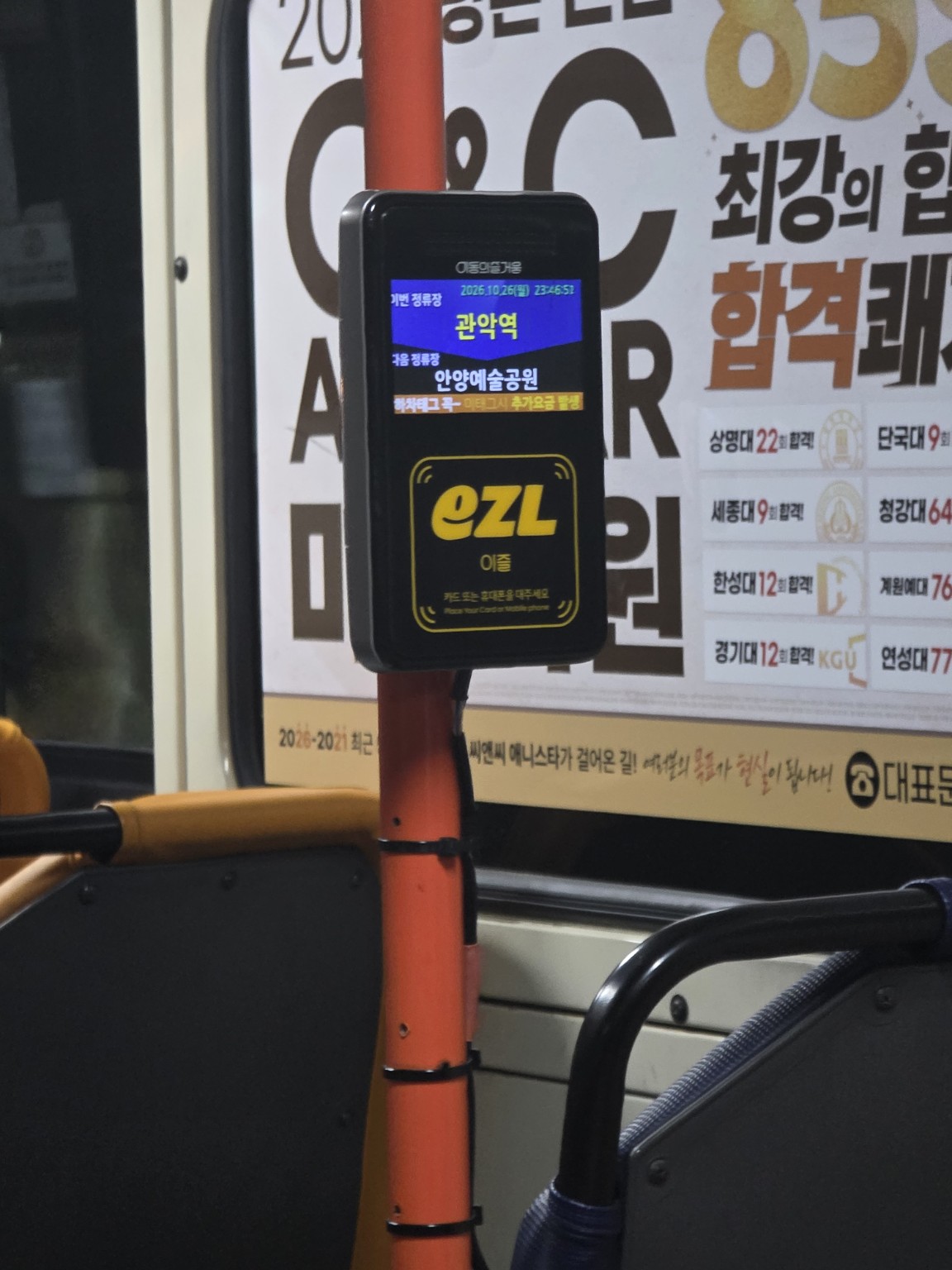
Use the same transportation card or mobile transportation credential you used when boarding. Tap the reader near the rear exit when getting off and check that it registers. The EZL branding in this photograph helps you recognise the reader; you do not need to press the place name on its screen to select a destination.
The two stop names visible here are a useful reading example: 관악역 is Gwanak Station and 안양예술공원 is Anyang Art Park. Follow the label beside each name and the current announcement rather than relying on a photograph as live route information.
Tapping off records where the journey ends and matters for distance-based charging and transfer eligibility. Do it even if you do not intend to change buses. Gyeonggi’s integrated-fare FAQ explains that missing a required exit tap can lead to an additional charge on a later journey.
When the bus has stopped and the driver opens the door, step down carefully. Check for a kerb, a height difference and people or bicycles beside the exit. If the reader does not register, tell the driver before leaving rather than assuming it worked.
Transfers: tapping off does not make every onward ride free
In the Seoul metropolitan integrated-fare system, an eligible transfer normally needs to take place within 30 minutes of tapping off, with a 60-minute window during 21:00–07:00. The official Gyeonggi FAQ also lists a maximum of four transfers and excludes reboarding the same route from the transfer discount.
A transfer discount is not a promise that the next vehicle adds no fare: distance and service type can affect the total. Keep using the same card and check the current official metropolitan transfer conditions if the connection matters to your budget. Other Korean cities can have different rules.
Korean words worth recognising
| On the sign or screen | Meaning |
|---|---|
| 정류장 / 정류소 | Bus stop |
| 이번 정류장 | This stop |
| 다음 정류장 | Next stop |
| 하차 | Getting off / alighting |
| 환승 | Transfer |
| 잔액 | Remaining balance |
A simple checklist for your first ride
- Save the boarding stop, bus number, direction and destination stop.
- Prepare a compatible transportation card with enough balance.
- Board at the front, tap and check the response.
- Track the upcoming stops and press the bell before your destination.
- Tap off with the same card and leave through the rear door when it is safe.
For language support, keep “___에서 내리고 싶어요” (“I want to get off at ___”) and “카드가 안 찍혀요” (“My card is not registering”) ready on your phone. Show the destination while the driver is stopped rather than distracting them while driving.
For a journey combining bus and rail, our Seoul subway photo guide explains station entry, ticket machines and gates. If you want to explore the place named on the photographed reader, the Anyang Art Park half-day route can help you plan the visit separately from the bus journey.
Photos: ferry, taken during local bus travel in Anyang. Operational guidance checked October 28, 2026 against Korea Tourism Organization, Gyeonggi bus-information and metropolitan-fare guidance. Photographed displays show the situation when taken, not current arrival times or fares.