Looking for public restrooms in Korea while sightseeing? Start with a nearby subway station, an open shopping complex, or a mapped public toilet. If you are already inside a café or restaurant, asking the staff may be quicker than searching outside.
I sometimes have the same problem, even living in Korea. You are walking around, everything is fine, and suddenly finding a restroom becomes more important than the next stop on your itinerary.
The useful question is not just “Where is the nearest toilet?” It is “Can I reach it and use it right now?” A locked door, a closed building, or a restroom beyond the subway ticket gates can change your plan.
On this page — tap to expand
- In a hurry? Start here
- How to find public restrooms in Korea on a map
- Where should you look first?
- Two restroom signs you may see: real photos and how to read them
- My local tip: check large buildings, but ask about upper floors
- Korean phrases you can show on your phone
- Small details that can prevent another problem
- Before a long walk or a late-night outing
In a hurry? Start here
- Look around first. If you can see a station, open mall, or public restroom sign, ask for directions there.
- Search
화장실in your map app. This means “restroom.” Check the entrance and building hours rather than relying only on the distance. - Show someone this sentence:
가장 가까운 화장실이 어디예요?— “Where is the nearest restroom?” - If the door has a keypad, ask staff. They can tell you whether you may use it, provide a code where appropriate, or direct you elsewhere.
Save the Korean sentence before going out. It is easier to show your phone than to work out pronunciation when you are in a hurry.
How to find public restrooms in Korea on a map
Copy this search term:
화장실
For a more specific search, try 공중화장실, meaning “public restroom.”
Seoul Metropolitan Government’s restroom-location guide recommends searching 화장실 in Naver Map. It also directs visitors to the public-restroom layer on Smart Seoul Map.
In Seoul, you can use the official public-restroom map alongside your usual map app. The city’s location guide explains the available search routes in Korean.
For a restroom inside a building, look for the entrance and opening hours on the map listing. A slightly farther toilet with a clear entrance can be quicker to reach.
The Seoul map covers Seoul; use local searches when traveling in another city.
Where should you look first?
Subway stations: ask before passing the ticket gates
At a subway station, ask whether the restroom is before or beyond the ticket gates.
If you have already exited the gates and the restroom is on the other side, speak to station staff before tapping your card again. Follow their instructions about access.
Seoul Metro’s official station-restroom dataset includes detailed locations, opening hours, and diaper-changing facilities for stations under its jurisdiction on Lines 1–8. It can help with advance planning, although staff and on-site signs are more useful when you need an immediate answer.
Shopping complexes and department stores: follow the floor guide
During opening hours, look for restroom symbols on the directory or ask the information desk. The nearest restroom may be upstairs rather than on the entrance floor.
If you need an elevator, a changing table, or an accessible restroom, mention that before following directions. A toilet upstairs is only useful if you can comfortably reach it.
Parks and public facilities: check the actual entrance
Mapped park toilets and visitor facilities are worth looking for when you are already nearby. Pay attention to opening notices and the path to the entrance, especially after dark.
Cafés and restaurants: ask about access
If you are a customer, ask staff where the restroom is and whether it requires a code or key. It may be in a shared corridor rather than inside the shop.
If you are not a customer, ask whether you may use it. Access depends on the business and building; an unlocked door does not automatically mean public access.
Two restroom signs you may see: real photos and how to read them
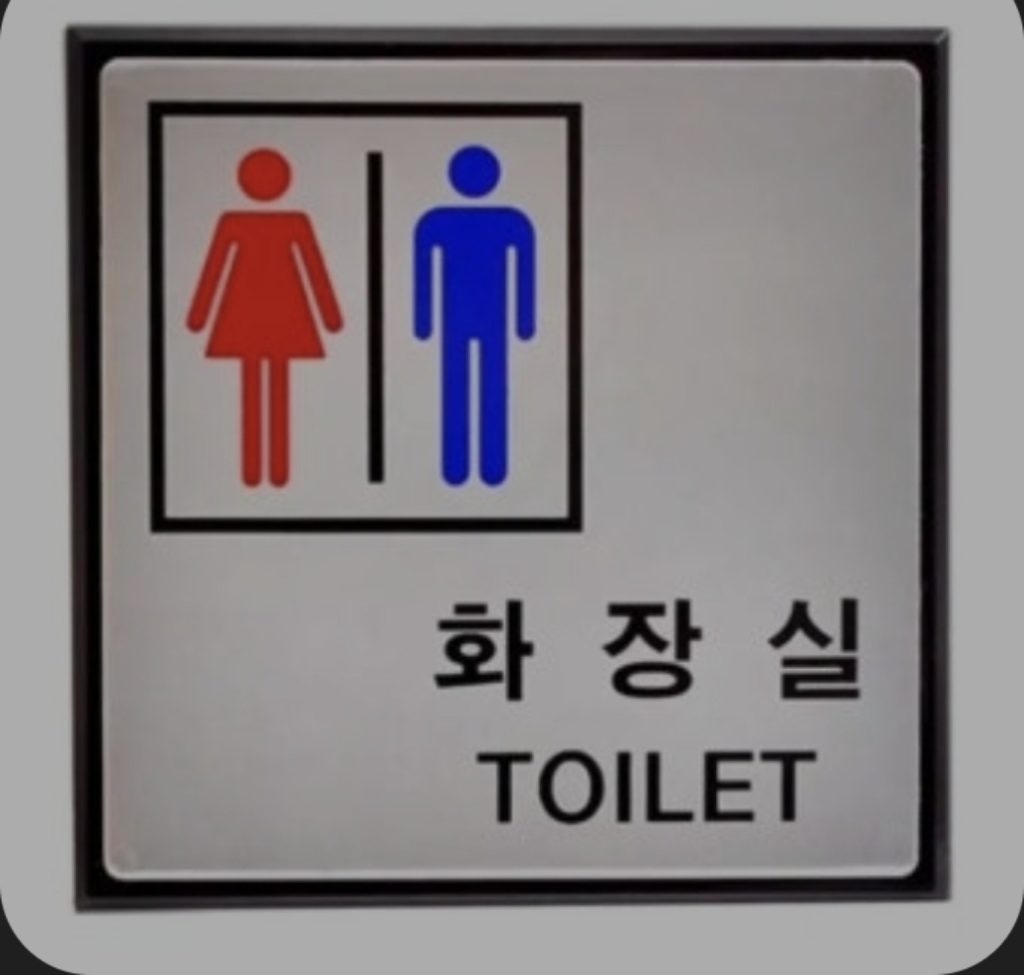
I took the two photos below myself. Both signs point to toilets, but the wording gives you different information about access. Look for the Korean words as well as the familiar pictograms.
개방화장실: a restroom open to the public, with stated hours
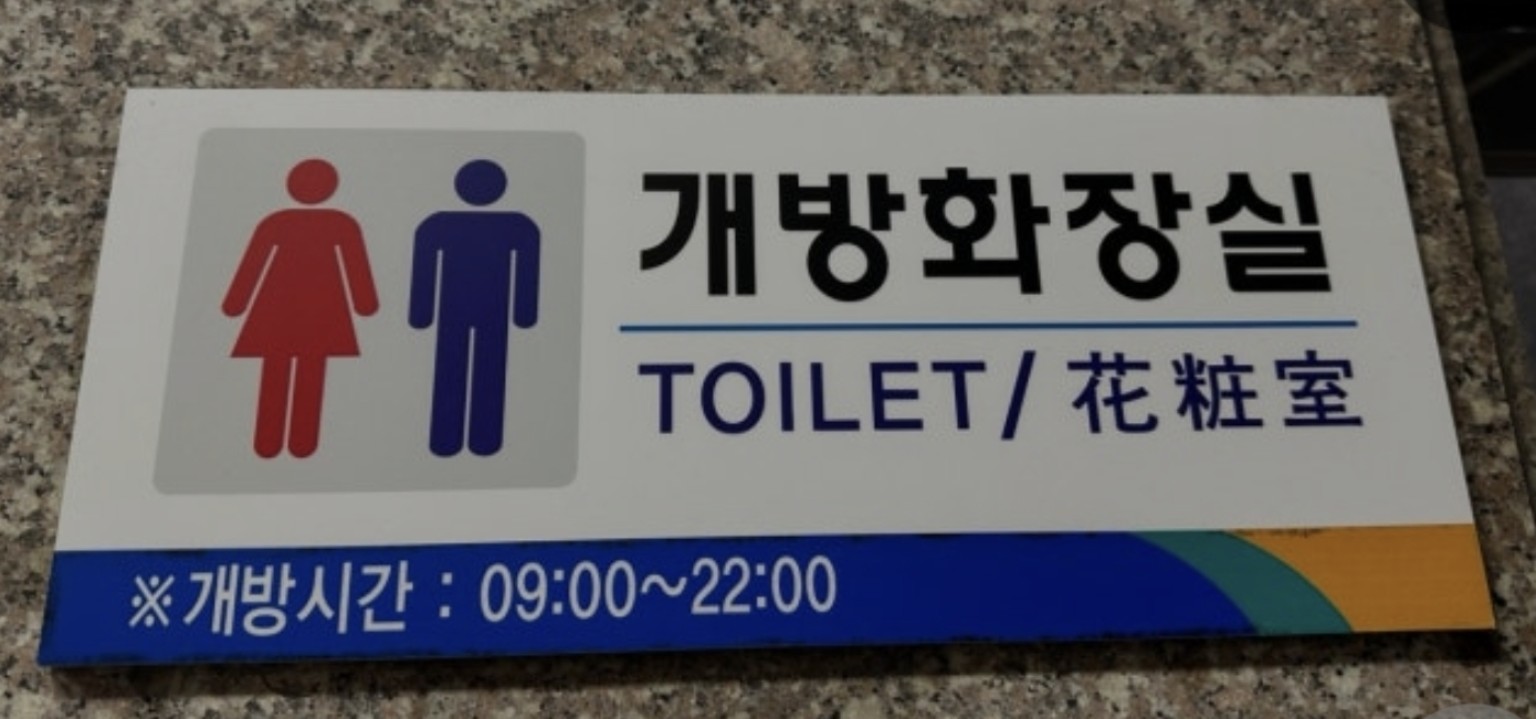
개방 means “open,” and 화장실 means “restroom.” Together, 개방화장실 identifies a restroom made available to the public. It may be inside a building rather than a standalone toilet. Seoul’s official restroom-program overview describes arrangements for opening private-building restrooms to public use.
The blue strip reads 개방시간 : 09:00~22:00: this photographed restroom’s posted opening hours are 9 a.m.–10 p.m. Other locations have their own hours.
화장실 / TOILET: a location sign, without an access promise
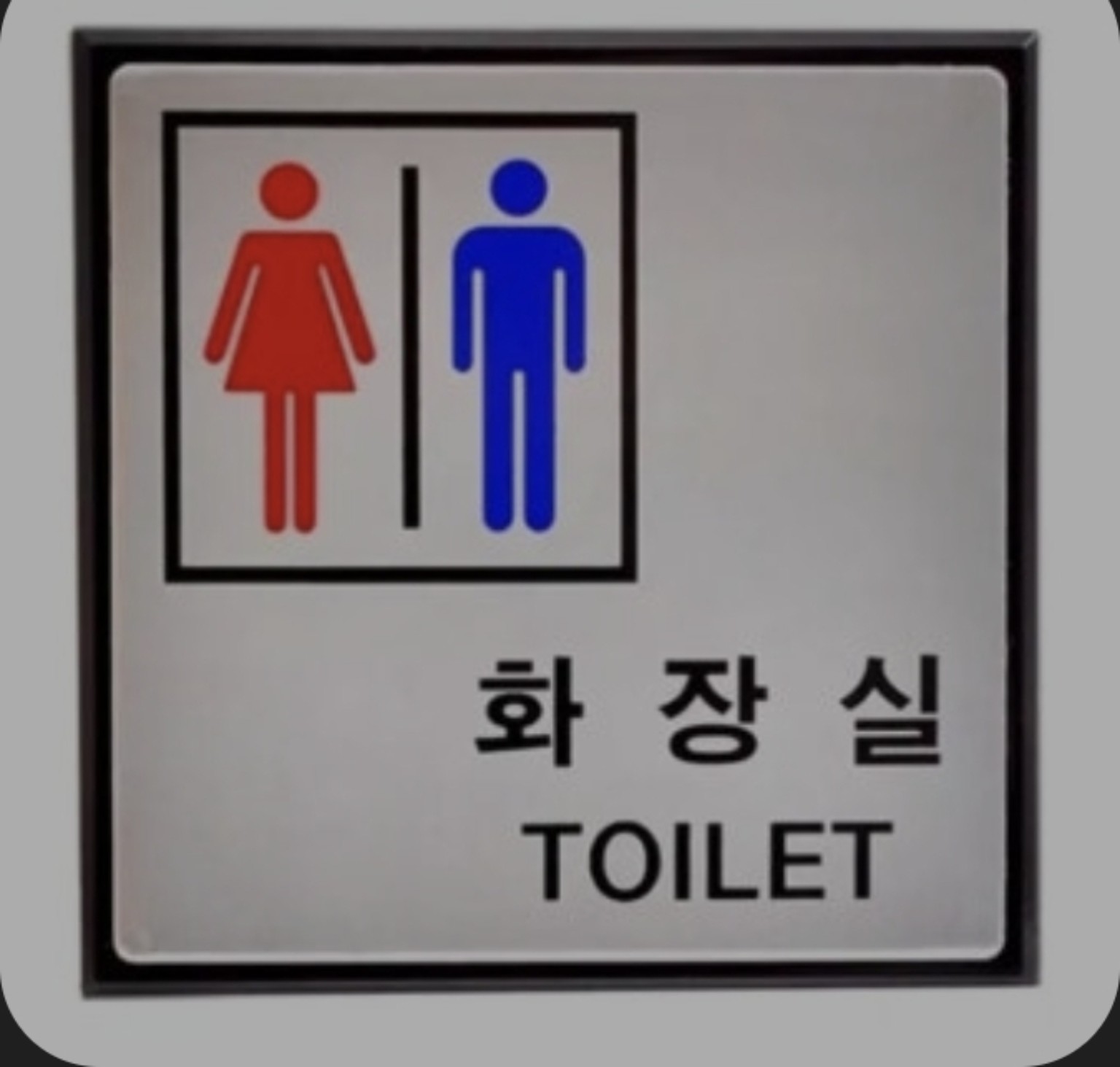
The second sign tells you that a restroom is here or nearby. The word TOILET alone does not tell you who may use it. In a shop or private building, check any separate customer-only notice or ask staff. The absence of 개방 does not automatically mean that visitors are prohibited either.
Both photos show female and male pictograms together. This marks restroom facilities; it does not establish that there is a shared unisex room. Follow the signs on the actual entrances. Read the symbols and labels rather than relying only on red or blue coloring.
At the entrance: three quick checks
- Read the access wording and time strip. For the first photographed sign, plan around the posted 09:00–22:00 window.
- Follow the marked route to the actual restroom. A sign on an outside wall may lead into a building. Look for arrows and floor information, then check the individual entrance labels.
- Check for a newer notice. If the entrance is closed, temporarily unavailable, or the route is unclear, ask the building staff before continuing.
To ask specifically about the time, show: 이 화장실은 몇 시까지 이용할 수 있나요? — “Until what time can I use this restroom?”
These photos illustrate how to read the signs. They do not identify a verified destination or confirm its current operating status.
My local tip: check large buildings, but ask about upper floors
One thing I have noticed is that some large buildings have accessible restrooms on the first floor. When I am out and need a toilet, I sometimes check the lobby for signs or ask at the reception desk.
In my experience, when the first-floor restroom has a keypad, there is a good chance that a restroom on the third floor or above will be unlocked. It is not always the case, but I have found this worth asking about.
That is a personal observation, not a rule across Korea. An unlocked upper-floor restroom may still be intended for tenants or customers.
The practical tip is to ask:
위층에 이용할 수 있는 화장실이 있나요?
“Is there a restroom upstairs that I can use?”
If staff point you to a visitor-accessible floor, it may save you another search outside. Follow the building’s directions and access rules. If the upper floors are private, card-controlled, or closed to visitors, choose another facility.
Also, Korean 1F means the ground-level entrance floor. That distinction helps if you are used to calling the level above the ground floor the “first floor.”
Korean phrases you can show on your phone
| What you need | Korean sentence |
|---|---|
| Where is the restroom? | 화장실이 어디예요? |
| Where is the nearest restroom? | 가장 가까운 화장실이 어디예요? |
| May I use the restroom? | 화장실을 이용해도 될까요? |
| What is the restroom code? | 화장실 비밀번호가 뭐예요? |
| Is there a restroom upstairs that I can use? | 위층에 이용할 수 있는 화장실이 있나요? |
| Is there a restroom outside the ticket gates? | 개찰구 밖에 화장실이 있나요? |
| Where is the accessible restroom? | 장애인 화장실이 어디에 있나요? |
| Is there a diaper-changing table? | 기저귀 교환대가 있나요? |
For a quick request, 화장실이 어디예요? is enough. Showing the written sentence avoids needing to pronounce it perfectly.
Small details that can prevent another problem
Check for toilet paper before using the cubicle. Keeping a small packet of tissues in your bag is a useful backup.
Follow the signs for toilet-paper disposal. Put wipes and sanitary products in the appropriate bin, not in the toilet.
Read bidet controls before pressing buttons. If the panel is unfamiliar, you can use the toilet without activating the wash functions. Look for an English label or ask for help if needed.
Check accessibility and changing facilities separately. A general restroom symbol does not tell you whether there is step-free access or a changing table. Ask staff about both the facility and the route.
Before a long walk or a late-night outing
Use a restroom before leaving a facility where you know access is available. For a long market visit, park walk, or evening outing, save one or two nearby options and check their hours.
You do not need to plan every toilet stop. Having the Korean search term and one sentence ready simply makes an awkward moment easier.
And if the first door is locked, ask before giving up. Staff may know another visitor restroom in the same building—or a better option nearby.
Official resources checked on October 7, 2026. Map listings, opening hours, and access arrangements can change. The upper-floor tip reflects the author’s personal experience and is not a verified nationwide access policy.