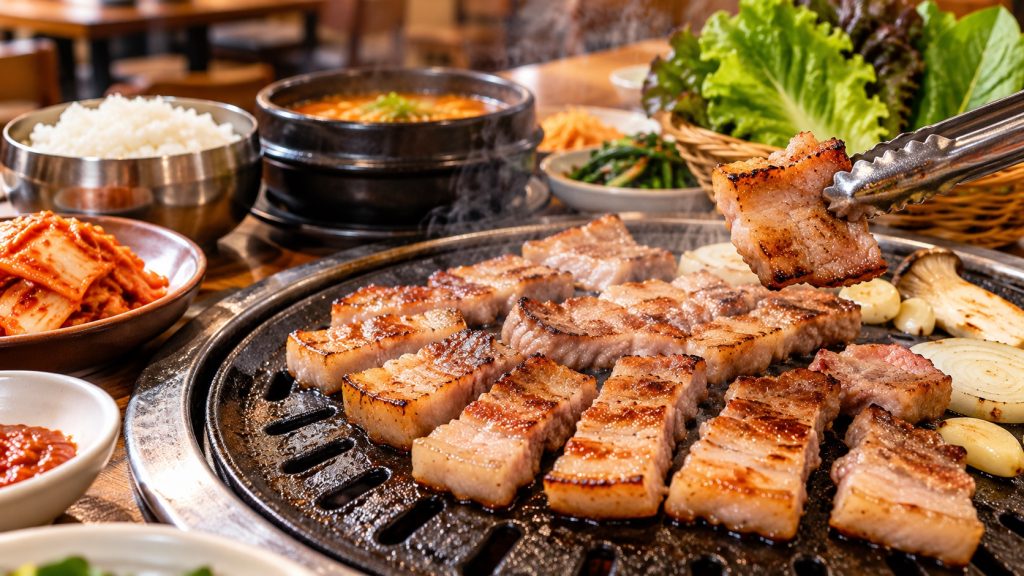
Korean BBQ in Seoul is easier to enjoy when you know three things before ordering: which meat you want, how the restaurant counts portions and whether staff will cook it for you. You do not need to memorize a long list of dining rules to have a good meal.
This guide helps first-time visitors read a barbecue menu, choose a starting order, make lettuce wraps and avoid surprises on the bill. It focuses on practical decisions rather than a ranking of restaurants.
Your First Korean BBQ Meal at a Glance
- Check that the restaurant serves the type of meat you want.
- Ask about the minimum order and the weight of each serving.
- Confirm whether staff grill the meat or you cook it yourself.
- Order a manageable first round, then add food if needed.
- Check which rice, stews, drinks and extras cost separately.
If barbecue is one stop on a wider food adventure, read our guide to must-try Korean foods in Korea for other meals to fit into your trip.
What to Order at Korean BBQ in Seoul
Korean barbecue describes a style of eating, not a single dish. Restaurants may specialize in pork, beef or particular cuts, so check the menu before sitting down.
| Menu name | What it means | What to check |
|---|---|---|
| Samgyeopsal — 삼겹살 | Pork belly | Thickness, serving weight and whether it is marinated |
| Moksal — 목살 | Pork neck or collar | The menu’s cut description and preparation |
| Dwaeji galbi — 돼지갈비 | Pork ribs or a pork galbi preparation | The exact meat and marinade listed |
| So galbi — 소갈비 | Beef ribs | Plain versus marinated and price per portion |
| Bulgogi — 불고기 | Seasoned, thinly sliced meat | How it is cooked; it may arrive as a prepared dish rather than a table-grill order |
Samgyeopsal: A Straightforward Starting Point
Pork belly is a useful first choice if you want to try a familiar Korean barbecue dish. The Korea Tourism Organization describes samgyeopsal as grilled pork belly that can be eaten with sauces, garlic and lettuce.
Start with a small cooked piece on its own, then try different accompaniments. This helps you decide what you enjoy before building a large wrap.
Moksal: Another Pork Cut to Compare
Moksal is commonly translated as pork neck or collar. It has a different balance of meat and fat from belly, but texture also depends on the cut and cooking.
If the restaurant allows mixed orders, comparing belly and moksal can make the meal more interesting. Ask whether the minimum applies to the whole table or to each selected item before ordering several cuts.
Galbi: Read the Full Name
Galbi means ribs; the word alone does not tell you whether the dish is pork or beef. Look for the animal name and whether it is plain or marinated.
The official dwaeji galbi guide describes pork galbi with soy-sauce or chili-based marinades. Check the specific restaurant’s preparation, especially if you avoid spicy food or particular ingredients.
How to Read Portions and Minimum Orders
You may see 인분 (inbun), meaning a serving or portion. It is an ordering unit, not a promise that one portion will be a complete meal for one person.
Before comparing two prices, compare the serving weights and what is included. A cheaper-looking portion can contain less meat, while a set may include food that would otherwise be ordered separately.
Minimum-order policies vary. Check the menu or ask staff before deciding what to eat; do not assume every restaurant has the same two-portion rule.
- Is there a minimum initial order?
- Can different cuts be combined to meet it?
- How many grams are in each serving?
- Can later orders be smaller than the first round?
A Practical First Order for Two People
Choose one or two cuts you both want, meet the restaurant’s minimum and pause before adding more. Order rice or a shared side if you want it, but confirm whether it is included.
This is a flexible approach, not a fixed portion recommendation. Appetite, serving size and side dishes differ considerably.
Who Cooks the Meat?
Some restaurants provide grilling service; others expect diners to cook. The Korea Tourism Organization’s food guide describes both styles, so ask before taking over the grill.
If staff are cooking, let them manage the heat, turning and cutting. If you are cooking, ask how to use the equipment and how to recognize when that particular cut is ready.
- Keep utensils used for raw meat separate from utensils used for eating.
- Leave enough space on the grill to turn pieces without crowding them.
- Ask for help with smoke, a dirty grill or meat that is burning.
- Let staff handle hot plates, charcoal and grill replacements.
Kitchen scissors may be provided to cut meat into manageable pieces. Use them according to the restaurant’s instructions, and keep children away from the hot cooking surface.
How to Make a Korean BBQ Lettuce Wrap
A leaf wrap is called ssam (쌈). Place a cooked piece of meat in lettuce or another provided leaf, add a little sauce and include the accompaniments you enjoy.
Keep the wrap small enough to eat comfortably. Start with less sauce and fewer fillings, then adjust. You can also eat the meat and side dishes separately.
Ssamjang (쌈장) is a dipping sauce, and banchan (반찬) are side dishes. Their ingredients differ by preparation; ask before eating if you have an allergy or dietary restriction.
Rice, Stew and Noodles: What Costs Extra?
Before ordering, distinguish the meat portion from a full set meal. Rice, stew, noodles, drinks and premium extras may have separate prices even when small side dishes are already on the table.
Look for 공깃밥 for a bowl of rice, 된장찌개 for soybean-paste stew and 냉면 for cold noodles. Ask about the ingredients and size rather than ordering every accompaniment at once.
For refillable side dishes, check whether the restaurant uses a self-service counter or staff service. Do not assume every item on the table has unlimited free refills.
Korean BBQ Etiquette for First-Time Visitors
Follow the Table’s Pace
If you are dining with Korean hosts, follow their lead on starting the meal, sharing food and pouring drinks. In a casual meal with travel companions, consideration and clear communication matter more than memorizing formal rules.
Use Shared Utensils Thoughtfully
Use serving tools when provided and avoid touching shared dishes with utensils that have been in your mouth. Keep raw-meat tools away from cooked food.
You Do Not Need to Order Alcohol
Water or a soft drink is a perfectly workable choice. You can enjoy the meal without joining drinking customs. Check the menu before requesting a particular beverage.
Check Where to Pay
Ask whether payment is made at the table or cashier and whether splitting the bill is possible. Tipping is not customary in Korea, as explained by Visit Seoul’s etiquette guide.
Useful Korean Phrases for Ordering BBQ
You can show these written phrases to staff instead of relying on pronunciation.
| Korean | English |
|---|---|
| 삼겹살 2인분 주세요. | Two servings of pork belly, please. |
| 최소 몇 인분 주문해야 하나요? | What is the minimum number of servings? |
| 1인분에 몇 그램인가요? | How many grams are in one serving? |
| 고기를 구워 주시나요? | Do you grill the meat for us? |
| 공깃밥은 별도인가요? | Is rice charged separately? |
| 혼자 식사할 수 있나요? | Can I dine alone? |
| 계산해 주세요. | The bill, please. |
The example order is a language example. Check the restaurant’s minimum before using it.
Can You Eat Korean BBQ Alone in Seoul?
Ask before sitting down. Acceptance of solo diners, minimum portions and table arrangements vary by restaurant.
If a tabletop grill meal does not suit your appetite or budget, look for a clearly advertised individual set or a prepared grilled-meat meal. Confirm the serving style so you know whether you will cook at the table.
How to Budget for Your BBQ Meal
Calculate the total from the current menu: meat portions, rice or noodles, drinks and any additional charges. Pork and premium beef meals can differ greatly in price, so one citywide “Korean BBQ price” would be misleading.
Use our Seoul travel budget guide to decide how this meal fits alongside hotels, transport and sightseeing.
Fit Korean BBQ Into Your Seoul Itinerary
Choose a restaurant near the area where your sightseeing ends. A long journey across the city for dinner can leave you rushed, especially if there is a queue.
Our 3-day Seoul itinerary for first-time visitors can help you group the day’s stops. For more food and cultural experiences, explore the best things to do in Seoul.
Frequently Asked Questions
What should a beginner order at Korean BBQ?
Samgyeopsal is a practical starting point for diners who eat pork. Compare it with moksal or galbi if the menu and minimum-order policy allow.
Does every Korean BBQ restaurant cook for you?
No. Ask whether staff provide grilling service before handling the meat or equipment.
Are all side dishes and rice free?
No. Check the menu for included items and separate charges; rice, stews and special additions may cost extra.
Is Korean BBQ suitable for dietary restrictions?
That depends on the restaurant, ingredients and preparation. Marinades, sauces and shared equipment need checking. For allergies, provide a written explanation and confirm whether the restaurant can accommodate it.
Your first Korean BBQ meal does not need to be elaborate. Read the portion details, ask who handles the grill and begin with food you want to try. Those small checks make it easier to relax and enjoy dinner.